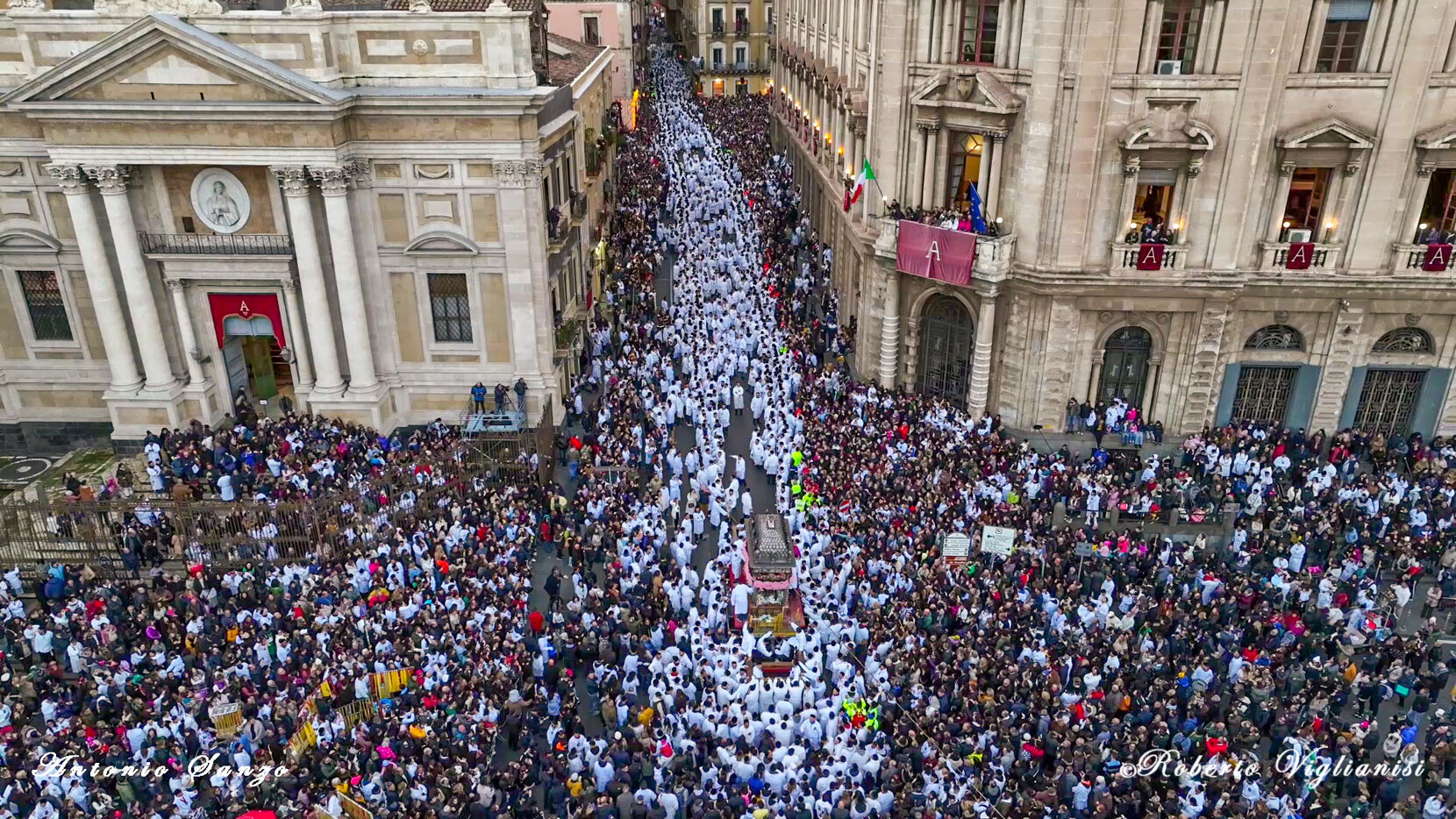
Festival of Saint Agatha in Catania | From February 3 to 6, 2025


CONTACTS
CONTACTS
MENU
MENU
Sede: Municipio, Piazza Duomo.
CATANIA | Sicilia
comitatosantagata22@libero.it
Pec: comitatosantagata22@pec.it
Sede: Municipio, Piazza Duomo.
CATANIA | Sicilia
comitatosantagata22@libero.it
Pec: comitatosantagata22@pec.it
The Feast of Saint Agatha is the most important religious festival in the city of Catania. It is celebrated in honor of the city's patron saint, and it is one of the most attended Catholic religious festivals, precisely because of the number of people it involves and attracts.
The Feast of Saint Agatha is the most important religious festival in the city of Catania. It is celebrated in honor of the city's patron saint, and it is one of the most attended Catholic religious festivals, precisely because of the number of people it involves and attracts.


DOWNLOAD THE OFFICIAL APP AND FOLLOW THE EVENT LIVE:
SCIENTIFIC PUBLICATIONS
CONTRIBUTORS














Candidacy for Intangible Cultural Heritage of Humanity
www.santagatacatania.it @ All Right Reserved 2025 | PRIVACY POLICY
www.santagatacatania.it @ All Right Reserved 2025 | PRIVACY POLICY
Website created by Flazio Experience
The photographic material was provided by Jessica Hauf - Video by Joshua Kohler © 2024 | ALL RIGHTS RESERVED
The Feast of Saint Agatha in Catania is a tradition that intertwines faith, history, art, and city life.
Each edition involves a large number of people and transforms the city into a stage of rituals, routes, music, and images.
This section gathers scientific contributions from scholars and experts who explore the Festival from different perspectives, with the aim of conveying its complexity as a living intangible heritage: from devotional roots to the role of institutions, from artistic expressions to social and economic impact.
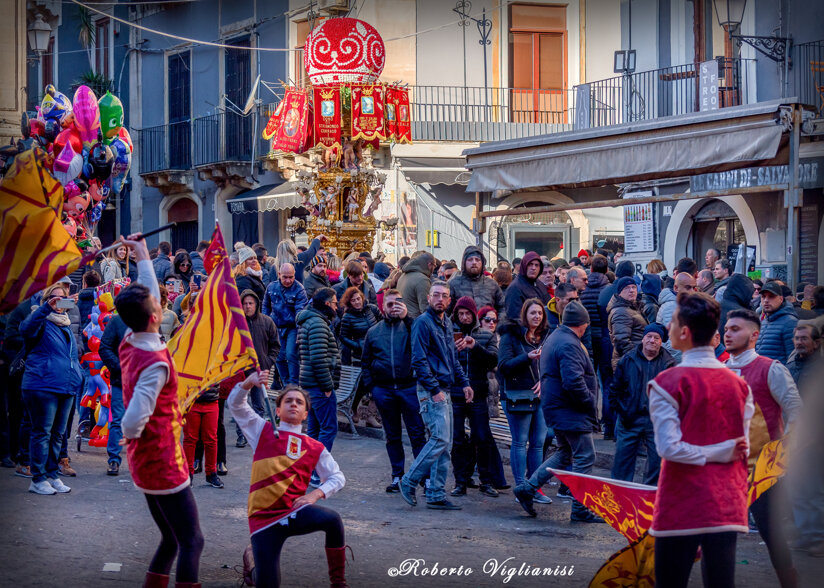
A tangible trace that remains
The online publication is not just a container of studies: it is one of the tangible outcomes of the application process. It will remain over time as a documented record of the work carried out - a trace that can be consulted and verified, which sets out the methods, results, and content produced by the scientific community and local stakeholders.
In other words, while the Festival is renewed year after year, the publication represents its material legacy: an orderly archive of knowledge that makes stable what is by nature dynamic, preserving the most significant analyses and interpretations developed along the path towards recognition.
Topics addressed
Religious value and devotional rituals - Agatine traditions, popular devotion, liturgical and processional moments interpreted with historical and anthropological tools.
Historical and cultural dimension - Origins, transformations over time, and connection with the urban fabric of Catania.
Artistic expressions - Processions, candelore, sacred artworks, ephemeral installations, and musical repertoires.
Identity and social cohesion - The sense of belonging of the Catanese community, citizen participation, and the role of groups of devotees in transmitting practices.
Economic and touristic impact - Attendance, impact on local businesses, and models of event sustainability within the framework of religious and cultural tourism.
Urban space and material heritage - Processional routes, symbolic places (Cathedral, churches, squares), and setups that temporarily redesign the city.
The publication is intended for a broad audience: institutions, professionals, students, enthusiasts, and the curious. Despite methodological rigor, the contributions use clear and accessible language, accompanied—when useful—by photographs, maps, and illustrations.
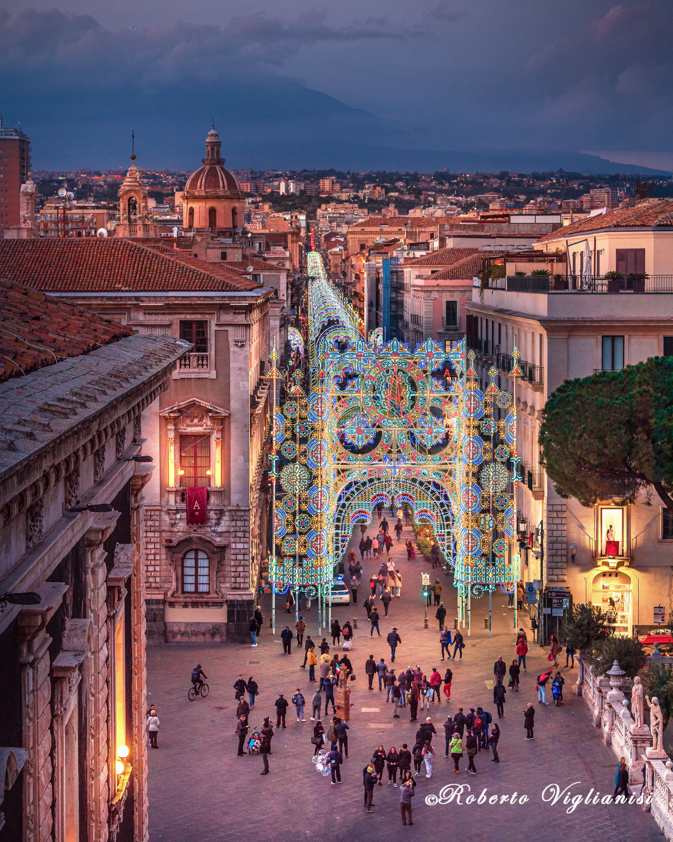
Value for the UNESCO candidacy
The scientific analysis supports the candidacy process, highlighting the significance of the Festival in the international context and its exemplary nature as a shared intangible heritage. In this framework, the publication serves as a lasting repository of the knowledge produced: a tool for transparency and public accountability that allows the path to be traced, results to be measured, and a reliable and accessible body of knowledge to be passed on to future generations.
This section is therefore a journey guided by scholars into the heart of the Feast of Saint Agatha and, at the same time, the permanent record of the path undertaken: an invitation to view the celebration not only as an event of faith, but as a unique historical, social, and cultural phenomenon, capable of speaking to the present without losing the memory of its origins.